Table of Contents
Last Updated: October 14, 2026
Why Custom Damascus Steel Blades Demand Specific Care
Damascus steel blades are not ordinary knives. The layered steel construction that creates those stunning patterns also demands a different maintenance approach than standard stainless steel. At GS Custom Knives, we craft custom Damascus blades from 1095 and 15N20 high-carbon steels folded into hundreds of layers. That artistry requires respect.
 Custom Damascus hunting knives
The high-carbon content that gives Damascus steel its legendary edge retention and toughness comes with a trade-off: these blades are more susceptible to rust and corrosion than their stainless cousins. The layered construction means moisture can seep between steel layers if you're not careful. One forgotten blade sitting in a damp drawer becomes a lesson in rust prevention you won't forget.
This guide covers everything you need to know about custom damascus steel blade care. We'll walk you through cleaning, oiling, sharpening, and storage so your blade stays sharp and beautiful for decades.
How to Clean a Damascus Steel Knife After Use
Clean your Damascus blade immediately after use. Don't let food, moisture, or minerals sit on the steel. The longer they linger, the higher your rust risk climbs.
Start with warm water and mild soap. Use your hands or a soft cloth to gently wash the blade. Avoid abrasive sponges or scrubbers that scratch the pattern.
Rinse thoroughly under warm running water. Make sure no soap residue remains. Any leftover soap can trap moisture against the steel.
Pat the blade dry with a clean cloth immediately after rinsing. Don't leave it wet on the counter. That standing water is your enemy.
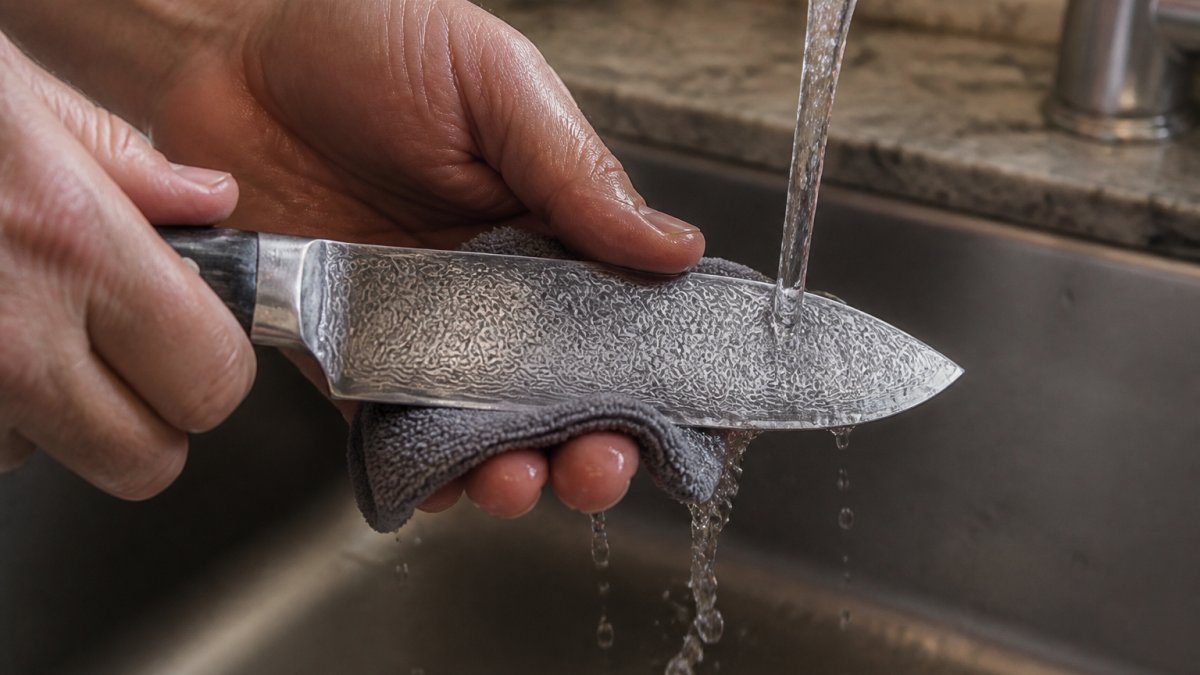 Close-up of hands rinsing a Damascus steel blade under warm running water with a soft cloth, showing the distinctive layered steel pattern clearly visible
For stubborn food residue, use your fingertip or a soft cloth to gently rub the problem area. If you need more scrubbing power, use a soft-bristled brush with warm soapy water. Never use steel wool, scouring pads, or harsh chemicals.
Drying completely to prevent rust
This step matters more than most people realize. Incomplete drying is one of the most common causes of rust on Damascus blades.
 Custom Damascus Chef Knife
After you've patted the blade dry with a cloth, let it air dry for a few minutes. Then wipe it one more time with a clean, dry cloth. This second pass catches any moisture you missed.
For extra assurance, hold the blade under gentle heat from a hair dryer on low setting for 30 seconds. The warmth evaporates moisture from crevices and between layers. This is especially helpful if your kitchen is humid.
Never leave the blade sitting blade-up in a drying rack. Water pools on the flat surface and creeps into the handle. Always store it flat or blade-down on a clean cloth until it's completely dry.
Pro Tip
Store your blade horizontally in a dry location immediately after cleaning and drying. Vertical storage allows moisture to migrate downward into the handle, where it can cause rust and wood damage.
How to Oil a Damascus Knife for Protection
Oiling your Damascus blade creates a protective barrier against moisture and oxygen. This is the secret to long-term rust prevention. The right oil applied correctly makes all the difference.
Choosing food-safe oils
Not all oils are created equal for Damascus blade care. Your choice matters because this blade might touch food.
Food-safe options include:
- Mineral oil (food-grade)
- 3-in-1 oil
- Beeswax and mineral oil blends
- Specialized knife oils designed for Damascus steel
Avoid vegetable oils, olive oil, and other cooking oils. They oxidize and become sticky or rancid over time. That residue attracts dust and creates a mess.
Avoid linseed oil. It dries and hardens on the blade surface, creating a thick coating that's hard to remove and looks dull.
GS Custom Knives recommends food-grade mineral oil or a dedicated knife oil for most situations.
Applying the protective layer
Use a minimal amount of oil. More is not better. A thin, even coat protects the blade far more effectively than a thick layer.
Apply oil with a soft cloth, lint-free if possible. Microfiber cloths work great. Rub the oil along the blade in the direction of the pattern. Don't scrub back and forth.
Cover both sides of the blade and the spine. Pay special attention to the edge. The sharp point is where rust often starts.
Wipe away excess oil with a clean cloth. Your blade should look slightly shiny, not slick or wet. If it looks oily, you've used too much.
For blades in storage, re-oil every month. For blades you use regularly, oil them after each cleaning. The frequency depends on your climate and how often the blade gets wet.
Watch Out
Never store an oiled blade in a leather sheath without a protective barrier. Oil can seep into leather and cause staining. Place a cloth or wax paper between the blade and sheath.
Damascus Steel Knife Rust Prevention and Storage
Rust prevention starts with storage. The environment where your blade spends most of its time determines whether it thrives or corrodes.
Safe storage environment
Store your Damascus blade in a cool, dry place. Humidity is your biggest enemy. Basements, bathrooms, and kitchens near sinks are terrible choices. Moisture levels fluctuate constantly in these areas.
 The Damascus midsize Kitchen knife
The ideal storage spot is a bedroom closet, pantry, or climate-controlled cabinet. Keep the humidity below 50 percent if possible (the EPA).
Store the blade flat or in a sheath. Never store it blade-up in a block or standing upright. Vertical storage allows dust and moisture to settle on the exposed blade surface.
If you use a knife block, make sure it's dry inside. Wood blocks can trap moisture. Check periodically for mold or mildew. If you find any, remove the blade immediately and let it air dry.
Leather sheaths offer excellent protection if kept dry. The sheath protects the blade from dust and accidental contact. But leather absorbs moisture, so don't store a sheathed blade in damp areas.
Avoiding common mistakes
Don't store your Damascus blade in the dishwasher or leave it soaking in water. Prolonged soaking forces water between the steel layers. Even a few hours underwater can start the rust process.
Don't wrap the blade in plastic wrap or airtight bags. Condensation builds up inside, creating a moisture trap. Your blade needs air circulation.
Don't store it with other metal utensils. Different metals touching create galvanic corrosion. Keep your Damascus blade separate from stainless steel or aluminum.
Custom Damascus hunting knives →
Don't ignore discoloration. Light surface discoloration is often patina, not rust. But if you see orange or brown pitting, address it immediately. We'll cover the difference in the next section.
How to Sharpen a Damascus Knife Without Damaging the Pattern
Sharpening is essential, but the layered construction demands care. Aggressive sharpening can flatten the pattern or damage the delicate layers.
Use a whetstone or diamond stone. These give you control. Avoid electric sharpeners, which generate heat and can damage the temper of the blade.
Maintain a 15-20 degree sharpening angle. This angle preserves the pattern and keeps the edge intact.
Sharpen regularly instead of waiting until the blade is dull. Light, frequent sharpening is gentler on the blade than aggressive sharpening sessions.
Use light to medium pressure. Let the stone do the work. Heavy pressure doesn't sharpen faster, it just damages the blade faster.
Stroke from the spine toward the edge, not side to side. This follows the natural structure of the steel and minimizes pattern disruption.
After sharpening, clean the blade immediately. Sharpening produces metal dust that can cause rust if left on the surface.
Key Takeaway
The pattern on your Damascus blade is part of its identity. Gentle, regular sharpening preserves both the edge and the beauty that makes the blade special.
Patina Versus Active Rust: What You Need to Know
Not every dark mark on your Damascus blade is rust. Understanding the difference between patina and active rust saves you from unnecessary panic and wrong fixes.
Patina is a thin, dark layer that forms on high-carbon steel over time. It's a natural oxidation process.
Active rust is orange, brown, or deep red discoloration with a rough, pitted texture. It eats into the steel.
To tell the difference, run your fingernail over the mark. Patina feels smooth. Rust feels rough or pitted. Patina wipes off easily with a cloth.
If you see patina, leave it alone. It's protecting your blade.
If you find active rust, address it quickly. Use a soft cloth with a tiny amount of oil and gently rub the affected area.
Prevent active rust by following the care steps in this guide: clean immediately, dry completely, oil regularly, and store in a dry environment.
Sheath and Handle Maintenance
Your Damascus blade is only as good as its sheath and handle. Neglecting these components can damage the blade indirectly through moisture and impact.
Leather sheaths need regular care. Keep them dry and clean. Wipe them down monthly with a soft cloth.
Inspect the sheath regularly for mold, mildew, or moisture damage.
Wooden handles require similar attention. The high-carbon steel of Damascus blades can cause moisture to migrate into the wood. Check handles monthly for cracks, swelling, or discoloration.
If your handle shows signs of moisture damage, remove the blade if possible and let the handle air dry.
Avoid exposing handles to extreme temperature changes. Rapid heating and cooling causes wood to expand and contract, which loosens the blade and can crack the handle.
Never soak the entire knife in water. The handle absorbs moisture and swells, pushing the blade out of alignment.
Your Damascus Blade Care Routine
The best maintenance is consistent maintenance. A simple routine prevents problems before they start.
| Task |
Frequency |
Time Required |
| Clean and dry blade |
After every use |
2-3 minutes |
| Apply protective oil |
After cleaning or monthly |
1 minute |
| Inspect for rust or damage |
Monthly |
2 minutes |
| Sharpen blade |
Every 3-6 months |
10-15 minutes |
| Check sheath and handle |
Quarterly |
5 minutes |
| Deep clean and condition |
Annually |
30 minutes |
Make this routine automatic. After you use your knife, clean it immediately. While the blade is still in your hand, dry it completely.
Monthly inspections catch small issues before they become big ones. Look for discoloration, rough spots, or handle damage. Early detection means easier fixes.
Sharpen your blade every three to six months depending on use frequency. Regular sharpening keeps the blade performing and prevents damage from dull-blade pressure.
Annual deep cleaning includes removing the blade from the sheath if possible, conditioning the leather, and inspecting the handle thoroughly.
The custom Damascus steel blades from GS Custom Knives are built to last a lifetime with proper care. These aren't throwaway tools, they're investments in quality and craftsmanship.
Proper Damascus steel blade care isn't complicated, but it does require attention. Your custom blade deserves better than a kitchen drawer and occasional rinsing.
Frequently Asked Questions
Can a Damascus knife go in the dishwasher?
No. Dishwashers expose your Damascus steel blade to prolonged soaking, harsh detergents, and high heat, all of which accelerate rust and corrosion. The high-carbon steel composition of Damascus blades is especially vulnerable to moisture. Always hand wash with mild soap and warm water, then dry immediately. This protects the blade's integrity and preserves its distinctive pattern for years to come.
How often should you oil a Damascus steel blade?
Oil your blade after every use or at least weekly if stored long-term. After cleaning and drying, apply a thin, even coating of food-safe mineral oil or specialized blade oil. This light oil coating creates a protective barrier against moisture and oxygen, which cause rust and pitting. For blades in frequent use, weekly oiling maintains peak protection. For storage, monthly oiling prevents oxidation.
What's the difference between patina and rust on Damascus steel?
Patina is a thin, dark, protective layer that forms naturally on high-carbon steel over time, it actually resists further corrosion. Rust is active oxidation that pits and weakens the blade. Patina looks matte and even; rust appears rough, orange-brown, or flaking. Both can develop on Damascus steel, but patina is harmless and valued by many collectors. Remove active rust immediately with a soft cloth and light oil; embrace patina as part of your blade's character.
Can you use WD-40 on Damascus steel?
WD-40 is not ideal for Damascus steel blades used in food preparation because it's not food-safe and can leave residue. For outdoor and hunting knives, a light application is acceptable for temporary rust prevention, but it's not a long-term solution. Instead, use food-safe mineral oil, specialized blade oils, or 3-in-1 oil for kitchen blades. These provide better protection without contamination risk and won't interfere with your blade's performance or pattern.