Table of Contents
Last Updated: September 28, 2026
What Makes Handcrafted Hunting Knives Worth the Investment
A handcrafted hunting knife isn't just a tool, it's a precision instrument built specifically for your needs. When you buy handcrafted hunting knives online, you're investing in durability, balance, and performance that mass-produced alternatives simply cannot match. The difference lies in attention to detail: custom blade geometry designed for your cutting style, handle materials chosen for your grip preferences, and steel selected for edge retention in field conditions.
A knife that feels wrong in your hand wastes energy and creates safety risks. A blade that dulls too quickly becomes frustrating in critical moments. Handcrafted knives solve both problems through intentional design and superior materials.
The investment pays dividends over time. A quality handcrafted hunting knife lasts decades with proper maintenance. You'll use it hundreds of times, skinning, field dressing, camp tasks, and it will respond the same way every time. That reliability matters when you're in the field and conditions are challenging.
Best Steel for Hunting Knives 2026
The steel you choose determines how your blade performs under real hunting conditions. Carbon steel and stainless steel represent the two primary paths, each with distinct advantages and trade-offs.
Carbon steel offers superior edge retention and ease of sharpening. It holds a sharper edge longer than stainless alternatives, which matters during extended field use. Carbon steel also responds better to hand-honing in the field with a simple stone. The trade-off is corrosion resistance, carbon steel requires more maintenance and will develop patina if exposed to moisture. For hunters willing to care for their blade, carbon steel delivers unmatched cutting performance.
Stainless steel prioritizes corrosion resistance and low maintenance. Modern stainless formulations have improved significantly, though they still don't match carbon steel's edge retention. Stainless steel works well for hunters in wet environments or those who prefer minimal upkeep. The blade won't rust or discolor, and you can leave it in a pack without worry.
High-carbon stainless represents a middle ground, better edge retention than pure stainless, better corrosion resistance than pure carbon. High-carbon stainless represents a middle ground, better edge retention than pure stainless, better corrosion resistance than pure carbon.
Heat treatment matters as much as the steel type itself. Proper heat treatment affects hardness, flexibility, and edge-holding ability. A blade treated too hard becomes brittle; too soft and it dulls quickly. This is where handcrafted knives excel, controlling every step of the heat treatment process to optimize performance for the specific steel and intended use.
Fixed Blade vs. Folding: Which Design Works for Field Dressing
Fixed blade knives dominate serious hunting applications, and the reasons are practical. A fixed blade with a full tang, where the steel extends completely through the handle, provides superior strength and reliability. During field dressing, you need a blade that won't fold unexpectedly or break under pressure. A fixed blade delivers that confidence.
The advantages stack up quickly. Fixed blades are faster to deploy, no opening mechanism to fumble with when you need the knife immediately. They're easier to clean and maintain in the field. There's no joint to collect blood or debris. A fixed blade also provides better control during precision cuts, which matters when working around organs and vital areas.
Folding knives suit different applications. They're compact for pack carry and lower profile for everyday use. Some hunters prefer folding designs for general camp tasks, keeping a separate fixed blade for field dressing. The choice depends on your specific hunting style and what you'll use the knife for most.
For primary hunting work, skinning and field dressing, a fixed blade with full tang construction is the standard choice. It's what professional guides and experienced hunters choose when performance matters most.
How to Choose Custom Knife Handle Materials
Your handle directly affects how the knife performs in your hand, especially during extended use or in wet conditions. The material you choose shapes comfort, grip security, and durability.
G10 is a modern composite that dominates custom hunting knives. It's lightweight, extremely durable, and provides excellent grip even when wet or bloody. G10 won't rot, crack, or absorb moisture. It's also easy to clean and maintain.
Micarta offers a similar performance profile with slightly different feel. It's a composite material that's tough and reliable, with a warmer texture than G10. Some hunters prefer the aesthetic of Micarta; others find it slightly less grippy when wet.
Leather appeals to traditionalists and collectors. It looks beautiful and feels natural in the hand. Leather requires more maintenance, you need to condition it periodically and keep it dry. For serious field use, leather is less practical than modern composites, though it remains popular for display pieces and lighter-use knives.
Wood provides classic aesthetics but demands care. Wood can crack, absorb moisture, and requires regular maintenance. It's less suitable for hunting applications where the knife faces harsh conditions.
The best handle material depends on your priorities. If you want the knife to perform reliably in any condition with minimal maintenance, choose G10 or Micarta. If aesthetics matter more than practicality, leather or wood offer visual appeal, just accept the maintenance requirements.
Add →
Handle shape matters equally. Your hand size, grip style, and the specific cutting tasks you perform should all influence the handle design. This is where customization shines, you can specify handle dimensions that fit your hand perfectly, improving control and reducing fatigue during extended use.
Blade Geometry and Edge Retention: What Matters in the Field
Blade shape determines how your knife performs for specific tasks. The geometry you choose affects cutting efficiency, control, and edge retention.
Drop point blades are the most versatile choice for hunting. The spine curves downward toward the tip, creating a blade that excels at precision work while maintaining strength. Drop point geometry works well for skinning and field dressing, you get fine control without sacrificing durability. This is the most popular shape for custom hunting knives.
Clip point blades feature a distinctive spine that appears to be "clipped" near the tip. They offer excellent control and a sharp point for detailed work. Clip points are slightly less strong than drop points in heavy use, but many hunters prefer the cutting characteristics.
Tanto blades provide a flat edge and reinforced tip. They excel at chopping and heavy-duty cutting but sacrifice some finesse for toughness. Tanto geometry is less common for hunting applications.
Edge retention depends on steel quality, heat treatment, and blade geometry working together. A properly designed blade with superior steel and precise heat treatment will hold an edge significantly longer than mass-produced alternatives. This means fewer sharpening sessions in the field and more reliable performance when it matters.
The angle of the edge affects both sharpness and durability. A sharper angle (15-17 degrees per side) cuts more efficiently but dulls faster. A steeper angle (18-20 degrees) holds an edge longer but requires more pressure to cut. Custom makers can optimize this angle for your specific steel and intended use.
Pro Tip
Ask your custom maker about edge geometry specific to your steel choice and hunting style. A 17-degree edge works beautifully in hard stainless steel but might be too aggressive for softer carbon steel. The optimization makes a real difference in field performance.
How to Commission a Custom Hunting Knife
Commissioning a custom knife begins with understanding what you actually need. Many hunters start with vague ideas, "a hunting knife", without considering blade length, handle size, steel type, or specific tasks. Clarity on these points leads to a blade you'll love using.
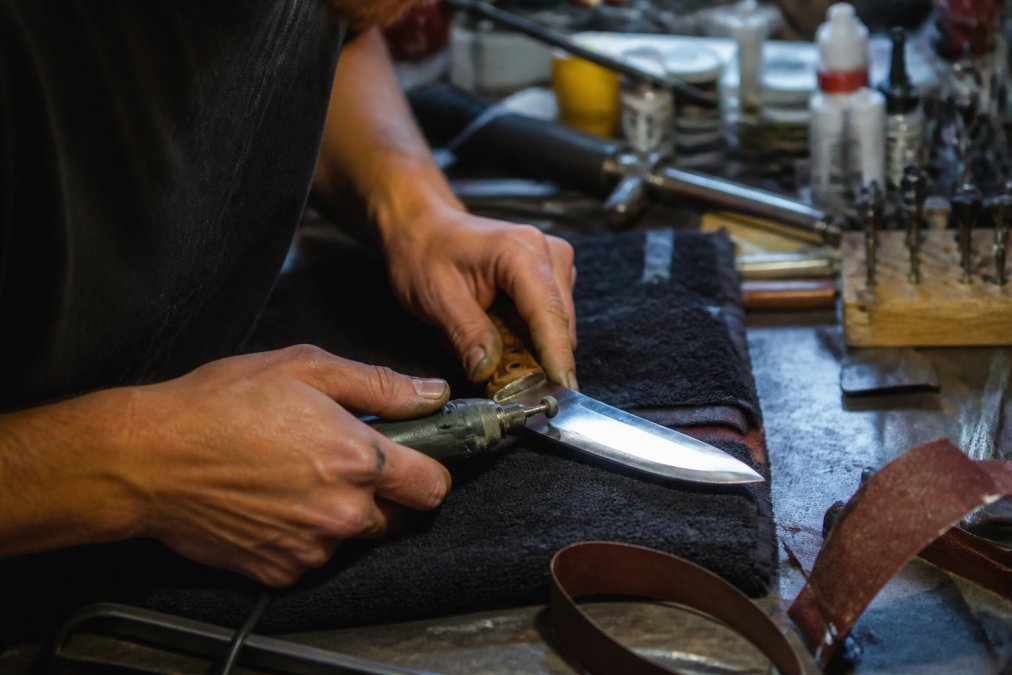 Craftsman's hands shaping and finishing a custom hunting knife blade at a workbench with specialized tools and materials visible under workshop lighting
Start by defining your primary use. Will this knife handle skinning, field dressing, camp tasks, or all three? Different tasks benefit from different geometries. A blade optimized for skinning might not excel at camp work. Understanding your priority helps the maker design accordingly.
Next, consider blade length. Shorter blades (3-4 inches) offer better control and precision. Longer blades (5-6 inches) cover more ground with each stroke, useful for larger game. Handle this decision based on game size and your hand size.
Handle dimensions matter tremendously. Measure your hand from the base of your palm to fingertip. This measurement guides handle length. Grip diameter should feel natural, not so thin it requires constant adjustment, not so thick it causes hand fatigue. A custom maker can craft dimensions that fit your specific hand.
Steel selection comes next.
The timeline for custom knives varies significantly.
Maintenance and Sharpening Your Handcrafted Blade
A handcrafted hunting knife demands proper care to maintain its performance. Regular maintenance extends blade life and ensures reliability when you need it most.
Watch Out
Never leave a handcrafted blade wet or exposed to moisture for extended periods. Even stainless steel benefits from dry storage. Corrosion can develop quickly in humid conditions, compromising both appearance and performance.
Frequently Asked Questions
What makes handcrafted hunting knives better than mass-produced alternatives?
Handcrafted hunting knives offer superior edge retention, balanced blade geometry tailored to specific tasks, and personalized handle ergonomics that factory knives cannot match. Custom makers control heat treatment and steel selection to ensure durability in field conditions. You also get direct communication with the maker about your specific needs, whether for skinning, field dressing, or general camp work. Our lifetime satisfaction guarantee reflects confidence in our work.
How long does it take to receive a custom hunting knife?
Lead times vary by current order volume. Before ordering, confirm the delivery timeline to ensure it aligns with your hunting season or field needs. Handcrafted quality takes time, rushing production compromises the heat treatment and finishing that give custom blades their edge retention and durability.
What steel types offer the best balance of edge retention and corrosion resistance for hunting?
Carbon steel holds an edge longer and is easier to sharpen, making it ideal for serious field use, but requires regular maintenance to prevent rust. Stainless steel resists corrosion better, especially for wet conditions or saltwater fishing, though it typically dulls faster than carbon steel. High-carbon stainless blends offer a middle ground with good edge retention and reasonable corrosion resistance. Your choice depends on your environment and how often you can maintain your blade. Discuss your hunting conditions with your custom maker to select the right steel for your use case.
Can I return or modify a custom hunting knife if it doesn't feel right?
Our lifetime satisfaction guarantee covers functional issues, defects, and sometimes handle adjustments. Before ordering, clarify what the guarantee covers, typical exclusions are cosmetic damage and normal wear. We can reshape the blade, adjust handle ergonomics, or even remake the knife if it genuinely doesn't meet your needs. This is one of the key advantages of buying directly from us: you have direct access to the maker for modifications and support.