Table of Contents
Last Updated: October 9, 2026
Learning how to debone a deer in the field starts with the right gear. A sharp, well-balanced knife does most of the work, and a few small items keep the meat clean and cool. At GS Custom Knives, we build blades for this job.
You need four things before you make the first cut:
- A sharp fixed-blade knife with a 3 to 4 inch edge
- Game bags to protect and cool the meat
- Nitrile gloves for sanitation
Skip the folding knife. A fixed blade is safer and stronger for field work.
Knife Selection for Field Deboning
The best knife for deboning has a thin, flexible blade and a sharp point. A stiff blade fights you around joints and bone. A flexible one slides along the bone and follows the seams between muscle groups.
Look for a 3 to 4 inch blade with a narrow profile; edge-holding steel matters more than size. Our The Ultimate Boning Knife uses 440C stainless steel, which resists rust and keeps a keen edge through a full debone.
 The Ultimate boning knife
Grip shape decides how long you can work. The Sure Grip Skinner adds a 7/8 inch index finger hole and a ribbed top for control when your hands are slick.
 Sure Grip Skinner
Game Bags, Gloves, and Other Essentials
Game bags keep flies off and let air reach the meat. Buy breathable synthetic bags, not cotton, which traps heat. Bring one bag per quarter plus one for trim.
Add these to your pack:
- Nitrile gloves (two pairs)
- A small sharpening stone or honing rod
- Paracord or game ties
Pro Tip
Carry a lightweight honing rod, not a full stone. A few passes realign the edge mid-job and save you from fighting a dull blade on the last quarter.
How to Field Dress a Deer: The Gutless Method
The gutless method removes the meat without opening the belly.
Position the deer on its side, cut along the spine from shoulder to hip, and peel the hide back to expose the muscle.
Then work each quarter and the backstraps free, one at a time, leaving the rib cage, guts, and hide in the field.
It works best when you plan to pack out, and it cools the carcass faster because you separate the meat right away.
How to Debone a Whitetail in the Field: Step-by-Step
You debone a whitetail by working from the outside in, freeing each muscle group along its natural seams. The job takes 30 to 45 minutes for one person: work one side, then roll the deer and repeat.
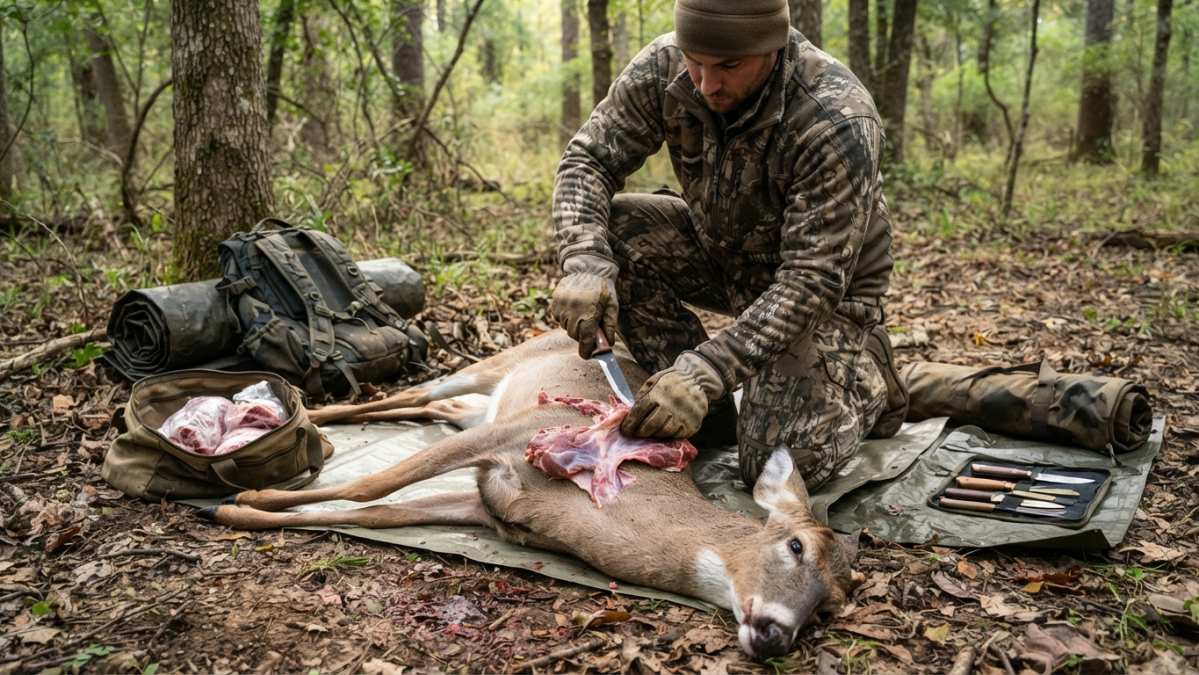 A hunter kneeling beside a field-dressed deer carcass, using a fixed-blade skinning knife to separate the front shoulder, with game bags and a backpack visible nearby in a wooded setting
Keep your blade angle flat against the bone. Let the knife find the seams instead of forcing through muscle.
Removing the Front Shoulders
Cut around the shoulder blade to free the front quarter.
The front shoulder comes off as one piece with little bone. Our The Elk Skinner is small enough for these tight cuts and sharp enough to glide through silver skin.
 The Elk skinner
Watch the shank. The lower leg has little meat, so stop above the knee and leave the shank in the field.
Harvesting Backstraps and Tenderloins
The backstraps run along both sides of the spine. Cut along the top of the spine, then peel the long muscle strip away from the bone with long, smooth strokes.
The tenderloins sit inside the body cavity under the spine. They are the most tender cut, so handle them gently. Remove them whole and bag them separately.
- Backstraps: two long strips, one per side
- Tenderloins: two small cuts, inside the ribs
- Keep both cool and clean
Watch Out
Cutting too deep near the spine can puncture the gut cavity and spill contents onto clean meat. Stay shallow and feel for bone with your fingertips before each stroke.
Separating the Hindquarters
The hindquarters hold the most meat. Find the ball joint where the leg meets the pelvis.
You can leave the hindquarter bone-in or debone it on the spot. Deboning saves weight on the pack out.
A longer blade helps here. The Yukon Skinner has a 3 1/2 inch cutting edge and a thumb stop for a no-slip hold when you apply pressure.
How Long Does It Take to Debone a Deer?
Deboning a deer in the field takes 30 to 45 minutes for one experienced person.
Speed comes from a sharp knife and knowing the joints. A dull blade adds 10 to 15 minutes and tires your hand.
Solo hunters should plan for the full 45 minutes plus pack-out time. Bring a headlamp if you might finish after dark.
Temperature Management: Keeping Meat Cool and Clean
Heat is the single biggest threat to wild game meat, and the clock starts the moment the animal goes down. Spoilage bacteria multiply fastest between roughly 40°F and 140°F, the USDA's "danger zone", and a deer's internal temperature at harvest sits right in the middle of it. Move the meat out of that range as fast as conditions allow.
Why Deboning Beats Leaving Meat on the Bone
Bone holds heat. A bone-in hindquarter cools from the outside in, and deep tissue around the femur can stay warm for hours after the surface feels cool. Deboning removes that thermal mass and exposes more surface area to moving air, so a boned-out quarter chills noticeably faster, the strongest argument for field deboning in warm weather.
Reading Ambient Temperature
Ambient temperature sets your working window. A common rule of thumb among experienced hunters:
-
Below 40°F: You have hours of leeway. Meat can hang overnight if it stays dry and air moves around it.
-
40°F to 60°F: Treat it as a working day. Get meat bagged, shaded, and off the ground within an hour or two of the kill.
-
60°F to 80°F: Move fast. Bag the meat immediately, keep it in shade, and plan to reach a cooler within a few hours.
These are guidelines, not guarantees, humidity, wind, sun exposure, and recovery time after the shot all shift the timeline.
The Four Cooling Levers
You control four variables in the field:
-
Airflow. Breathable synthetic game bags let air circulate; cotton traps heat and moisture. Hang bags where wind moves through them.
-
Surface area. Smaller, flatter pieces cool faster than large roasts. You can cut a hindquarter into top round, bottom round, and sirloin to speed cooling.
-
Elevation. Heat rises and ground radiates warmth. Hang meat at least a few feet off the ground, ideally in shade.
-
Moisture. Wet meat spoils faster than dry meat. Blot surface blood with a clean cloth and avoid rinsing with water in the field, a wet surface is a bacterial runway.
The Ice-Chest Strategy
If you hunt close to a vehicle, stage a cooler with block ice or frozen jugs before leaving camp. Block ice melts slower than cubes and produces less standing water.
For remote pack-outs, frozen gel packs in a soft cooler buy several hours of safe transport. Rotate them so the coldest packs sit against the thickest cuts.
Key Takeaway
The single biggest cause of ruined wild game meat is heat, not dirt. Cool it fast, keep it dry, and get it into a cooler or a cold night as soon as the terrain allows.
Watch Out
Do not judge doneness by feel alone. A quarter that feels cool on the surface can still be warm at the center. If you have any doubt, cut into the thickest part and check before you commit to a long pack-out.
Trimming, Packing Out, and Waste Disposal
Trimming, packing, and disposal are three separate jobs, each with its own rules. Getting them right protects the meat, keeps you legal, and keeps you from leaving a mess that reflects badly on hunters.
Trimming for Quality and Weight
Trim silver skin, fat, and bruised meat before you pack.
Bloodshot meat around the wound channel should come off too, it tastes metallic and spoils faster than clean muscle.
A boned-out whitetail yields roughly 40 to 50 pounds of edible meat, depending on the animal's size and how aggressively you trim. That number matters when you plan the pack-out.
Packing Out Without Breaking Down
Weight management is the difference between one trip and three:
-
Use a frame pack or meat shelf. Load the heaviest cuts closest to your spine and high on the frame.
-
Balance the load. Split weight evenly between shoulders to avoid a lopsided hike that wrecks your knees.
-
Bag by cut, not by animal. Label or color-code bags so you know what you have when you get home.
With a partner, one person can start the pack-out while the other finishes processing, an overlap that saves an hour or more on a long haul.
Waste Disposal: What the Rules Actually Say
Disposal rules vary by state and land ownership. On most public lands, leaving a gut pile is legal and even beneficial, scavengers and soil organisms break it down within days. But some states restrict leaving carcass parts to slow the spread of chronic wasting disease (CWD), a prion disease affecting deer, elk, and moose. In CWD management zones, many agencies require hunters to leave the head and spinal column at the kill site or dispose of them in a designated landfill.
Before you hunt, check two things:
-
Your state wildlife agency's CWD rules for the county or unit you plan to hunt.
-
The land manager's rules, national forests, BLM land, state wildlife management areas, and private land can all differ.
A few universal practices reduce problems regardless of local rules:
-
Keep remains away from trails, water sources, and campsites. A gut pile 50 yards off a trail is fine; one on the trail is a hazard and a nuisance.
-
Do not dump carcass parts near roads or parking areas. It attracts predators and scavengers to places people frequent.
-
Pack out all trash. Gloves, bags, zip ties, and knife sheaths do not belong in the woods.
Watch Out
Moving a deer head or spinal column out of a CWD management zone can violate state law and contributes to disease spread. If you are unsure whether your hunting area is in a management zone, call your state wildlife agency before the season, not after the kill.
Leave No Trace in Practice
Leave No Trace ethics apply to game processing the same way they apply to camping: leave the site so the next person cannot tell you were there. That means no visible gut pile near a trail, no scattered trash, and no carcass parts in a creek or pond. If local rules allow you to leave remains, place them where they break down quickly and scavengers can reach them without being drawn toward people.
Pro Tip
Wipe your blade dry and oil it before you store it. Blood and moisture left on steel cause pitting, even on stainless. A dry blade lasts for seasons.
Conclusion
Field deboning tests your knife more than any other job. A dull or poorly balanced blade turns a 30-minute task into an hour of frustration. GS Custom Knives builds handcrafted blades with custom shapes and personalized handles, all from superior steel that holds an edge when it counts. Every knife comes with a lifetime satisfaction guarantee. Get started with GS Custom Knives and pack a blade that makes field deboning fast, clean, and reliable.
Frequently Asked Questions
Can you debone a deer without gutting it?
Yes. The gutless method lets you remove all four quarters, backstraps, and tenderloins without opening the body cavity. You start by skinning one side, then work around the ribs and spine to free each muscle group. This approach keeps the meat cleaner because you avoid contact with the digestive tract, and it is faster than traditional field dressing when you plan to pack out boneless meat.
What tools do you need to debone a deer in the field?
You need a sharp fixed-blade knife with a 3 to 4 inch blade, game bags for transporting meat, and disposable gloves. Some hunters also carry a small sharpener or honing steel.
How long should it take to debone a deer?
A single person working efficiently can debone a deer in the field in about 30 to 45 minutes. Two people working together often finish in 20 to 30 minutes. Speed depends on knife sharpness, familiarity with the anatomy, and whether you are removing bone-in quarters or fully boning out each cut. Practice reduces time significantly.
How do you keep deer meat clean while field deboning?
Lay the carcass on a clean tarp or plastic sheet, wear disposable gloves, and avoid dragging meat through dirt or leaves. Place each cut directly into a clean game bag as you remove it. Keep your knife wiped clean between sections. If the animal was shot in the gut, discard any meat that contacted digestive contents and rinse your blade before continuing.