Table of Contents
Last Updated: September 30, 2026
What Causes Knife Blade Chipping
Knife blade chipping happens for specific reasons. Understanding these causes is the first step to learning how to prevent knife blade chipping and keeping your blade sharp. Most chipping comes from how the knife is used, not from poor manufacturing.
Impact Damage and Stress Fractures
A chipped blade usually starts with impact. You hit a hard surface or apply sudden pressure at the wrong angle. This creates stress on the edge. The blade can't handle it, and a piece breaks off.
Stress fractures work differently. They develop over time from repeated small impacts. Each time you use the knife incorrectly, tiny damage accumulates. Eventually, a larger chip appears.
The edge is the weakest part of your blade. It's thin and sharp by design. That makes it vulnerable to force applied at the wrong angle. When you chip a blade, you've exceeded what the edge geometry can withstand.
Steel Hardness, Tempering, and Brittleness
The hardness of your steel matters. Harder steel holds an edge longer. But harder steel is also more brittle. Brittleness means the edge breaks more easily under stress.
Tempering is the heat treatment that controls this balance. Proper tempering creates steel that's hard enough to stay sharp, but tough enough to resist chipping. Poor tempering leaves the blade either too soft (dulls quickly) or too brittle (chips easily).
GS Custom Knives uses cryogenic treatment on many blades. This special freezing process hardens the steel and helps it hold an edge. It also improves how the blade resists impact. The result is a blade that chips less often and stays sharp longer.
Micro-Chipping vs. Macro-Chipping
Micro-chipping is invisible to the naked eye. These tiny losses happen during normal use. You won't see them, but they dull your edge gradually. Micro-chipping is almost impossible to prevent completely.
Macro-chipping is visible damage. You can see the missing piece on your blade. This type happens from specific mistakes: hitting bone, cutting on a hard surface, or dropping the knife.
Both types reduce edge retention. Micro-chipping is slow and steady. Macro-chipping happens suddenly. Preventing macro-chipping is easier because you control the events that cause it.
Best Cutting Board Material for Knives
Your cutting board material is one of the most direct factors in preventing blade chipping. Hard surfaces transfer impact directly to your blade's edge; soft surfaces absorb that energy and protect edge geometry. Understanding the hardness and impact properties of each material helps you make the right choice.
Wood: The Gold Standard
Wood is the best choice for knife blades. It's gentle on edges and won't cause chipping. Hardwoods like maple, walnut, and cherry are ideal because they absorb impact energy through their grain structure. When your blade strikes wood, the fibers compress slightly rather than creating a rigid collision. This cushioning effect protects your edge geometry.
Hardwoods typically have a Janka hardness rating of 900-1500, which is soft enough to protect your blade but hard enough to resist deep scoring and bacterial growth. Many professional chefs use wood boards for this reason. Wood also naturally resists bacteria better than plastic, and it's easy to maintain, hand wash and air dry.
Softwoods like pine or cedar are too soft and will develop deep grooves that trap food and bacteria. Stick with hardwoods.
Bamboo: A Harder Alternative
Bamboo boards work well and are harder than typical wood (Janka hardness around 1380-1600 depending on the cut). Bamboo is durable and attractive, making it popular for everyday cutting. Because bamboo is denser than most hardwoods, it resists scoring better. However, this density also means it transfers slightly more impact to your blade than softer wood. Bamboo is still a safe choice, the difference is minimal, but if you own a high-carbon steel blade prone to chipping, a softer hardwood may be marginally better.
Plastic: Acceptable but Compromised
Plastic boards are acceptable for knife use. They're softer than wood and bamboo (typically Janka equivalent of 300-600), so they protect your blade reasonably well. However, plastic boards develop deep grooves over time, which harbor bacteria and food particles. They also dull your blade slightly faster than wood because the surface is less forgiving. Clean plastic boards in the dishwasher if you prefer, but hand washing extends their life. Plastic is best viewed as a budget-friendly option, not an ideal choice.
Glass, Marble, and Stone: Avoid Completely
Avoid glass, marble, and stone entirely. These surfaces are extremely hard, glass is around 5.5 on the Mohs hardness scale, marble 3-4, and stone varies widely but is typically 3-5. When your blade strikes these materials, there is no give. The impact is direct and rigid, transferring maximum force to your edge. Even one pass across glass can create visible micro-chipping or edge rolling. Repeated use on stone or marble will chip your blade noticeably within weeks.
These materials also dull your edge rapidly because the blade cannot cut into the surface; instead, it skids and dulls. Many home cooks make the mistake of using marble or granite countertops as cutting surfaces. This is one of the fastest ways to damage a quality blade.
Ceramic: A Hidden Risk
Ceramic boards are risky. Ceramic is very hard (typically 8-9 on the Mohs scale, similar to glass) and creates the same rigid collision problem as stone. Some ceramic boards are glazed, which makes them even harder and more slippery. Your blade will chip and dull quickly on ceramic. Avoid them.
Practical Recommendation
For maximum blade protection, use a hardwood board (maple or walnut) for everyday cutting. If you prefer durability and low maintenance, bamboo is a solid second choice. Reserve plastic for tasks where you don't mind accelerated dulling, such as cutting raw meat (to avoid cross-contamination). Never use glass, stone, marble, or ceramic if you want to prevent knife blade chipping.
Proper Edge Angle Maintenance and Honing Techniques
The angle of your blade's edge matters for preventing chipping. Most kitchen knives work best at 15-20 degrees per side. Thinner angles (12-15 degrees) are sharper but chip more easily. Thicker angles (20-25 degrees) chip less but don't cut as well.
Maintaining your edge angle prevents chipping. When you hone or sharpen, use the same angle every time. Consistency keeps your edge geometry stable. A stable edge resists chipping better than one that changes angles.
Is Honing a Knife the Same as Sharpening
No. Honing and sharpening are different processes.
Honing realigns the edge without removing metal. When you use your knife, the edge bends slightly. Honing straightens it back. You can hone your knife weekly. It takes 30 seconds and keeps your blade sharp between sharpenings.
Sharpening removes metal to create a new edge. You do this when honing stops working. Sharpening happens less often, maybe once or twice a year. It takes longer and requires proper technique.
Use a honing rod to maintain your edge between sharpenings. Draw the blade spine-first down the rod at your edge angle. Repeat on both sides. This simple step prevents many chipping problems by keeping your edge aligned.
Daily Cleaning and Maintenance Habits
How you clean your knife matters. Proper cleaning prevents corrosion and damage.
Hand wash immediately after use. Don't let food dry on the blade. Dried food can cause corrosion, especially acidic foods. Wash with warm soapy water and a soft cloth. Dry immediately with a clean towel.
Never put your custom knife in the dishwasher. The heat and harsh detergent damage the blade and handle. Dishwasher cycles also bang your blade against other items. This causes chipping and dulling.
Store your blade safely. Use a blade guard or knife block. Don't toss your knife loose in a drawer. The blade will hit other utensils and get damaged.
Oil your blade occasionally. Food-grade mineral oil protects against corrosion. Apply a thin coat and wipe off excess. This is especially important for carbon steel blades.
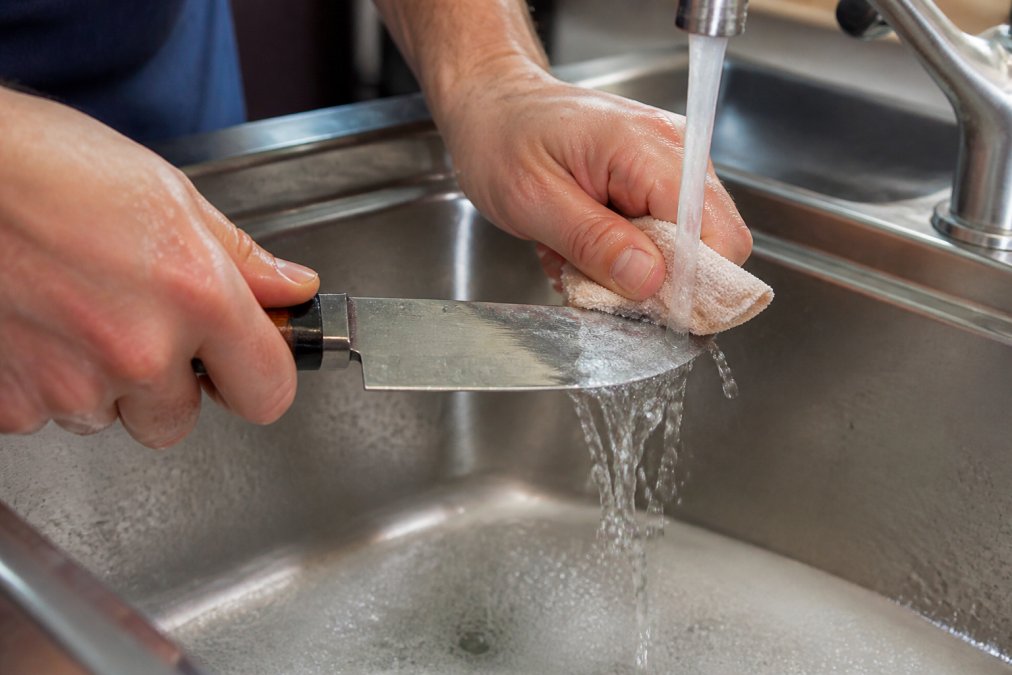 Close-up of hands washing a custom knife blade under running water with a soft cloth, showing proper gentle cleaning technique with warm soapy water and careful handling
Avoiding Abrasive Materials and Corrosion
Abrasive materials destroy your edge. Avoid contact with anything rough or gritty.
Don't use abrasive sponges or steel wool. These scrub away the blade surface and dull your edge. Use soft cloths and gentle soap instead. Your blade will thank you.
Corrosion weakens the steel. It creates pits and stress points where chipping starts. Prevent corrosion by keeping your blade dry. Acidic foods like citrus and tomatoes cause corrosion. Wipe your blade immediately after cutting these foods.
Salt accelerates corrosion too. If you cut salty foods, clean and dry your blade right away. Don't let salt residue sit on the steel.
Store your knife in a dry place. Humidity causes rust and corrosion.
How to Fix a Chipped Knife Edge
A small chip can be fixed at home. A large chip requires professional help.
Foods and Cutting Techniques That Risk Chipping
Certain foods are harder on your blade. Knowing which ones helps you prevent chipping.
Frequently Asked Questions
Can you fix a chipped knife blade?
Minor chips can be repaired through professional sharpening and deburring, where a skilled technician carefully removes the damaged edge and restores the blade geometry. Larger chips or stress fractures may require professional regrinding to restore the edge profile safely.
Is honing a knife the same as sharpening?
No. Honing realigns the edge geometry and straightens microscopic edge rolling without removing metal, typically done with a honing rod between sharpenings. Sharpening removes metal to create a new, sharper edge when the blade has lost its cutting ability. Both are essential: regular honing maintains edge stability and extends the time between sharpenings, while sharpening restores the blade when honing alone no longer works.
What's the best cutting board material for knives?
Soft materials like wood, bamboo, and end-grain boards are ideal for knife edge retention. They absorb impact without transferring shock back to the blade, reducing micro-chipping and edge damage. Avoid glass, ceramic, marble, and stone surfaces, which are extremely hard and cause immediate edge rolling and chipping. A quality wood or bamboo board significantly extends your blade's edge stability and prevents the brittleness issues that come from repeated impact on hard surfaces.
Does the hardness of steel affect how easily a blade chips?
Yes. Higher hardness (measured in HRC rating) allows a blade to hold a sharper edge longer but can increase brittleness if not properly tempered. Cryogenically treated stainless steel, like that used in GS Custom Knives products, balances hardness with toughness to resist chipping while maintaining exceptional edge retention. The tempering process is critical: improperly tempered steel becomes too brittle and chips easily, while well-tempered steel resists both dulling and damage.