Table of Contents
Last Updated: September 27, 2026
Understanding Steel Types for Field Dressing Knives
The best steel for field dressing knives balances edge retention, toughness, and corrosion resistance, and no single steel wins on all three. Carbon steel takes a razor edge and holds it, but it rusts if you look at it wrong. Stainless steel shrugs off blood and moisture, yet many grades struggle to match carbon's bite.
Carbon Steel: Sharp but Reactive
Carbon steel is the traditional choice for hunters who prioritize sharpness above all else. It sharpens quickly, takes a keen edge, and holds it through a full field dressing job. The catch is reactivity. Blood, moisture, and even humid air will corrode the blade, and a patina forms fast. Many experienced hunters accept that trade-off because a carbon blade touches up in seconds with a few passes on a stone.
Stainless Steel: Corrosion Resistance vs. Edge Holding
Stainless steel earns its name from chromium content, typically at least 13 percent, which forms a protective oxide layer. That layer resists rust and staining, making stainless easier to maintain in wet, messy conditions. The downside is that high chromium can reduce toughness and sharpenability. Modern stainless grades close much of that gap, but cheap stainless still dulls fast and sharpens poorly.
Key Properties That Matter for Field Dressing
Three properties decide how a steel performs in the field: edge retention, toughness, and corrosion resistance. Edge retention is how long a blade keeps a working edge before it needs honing. Toughness is resistance to chipping and cracking under stress. Corrosion resistance is how well the steel fights rust and staining. You rarely get all three at maximum in one steel, so the right choice depends on your hunting conditions and sharpening habits.
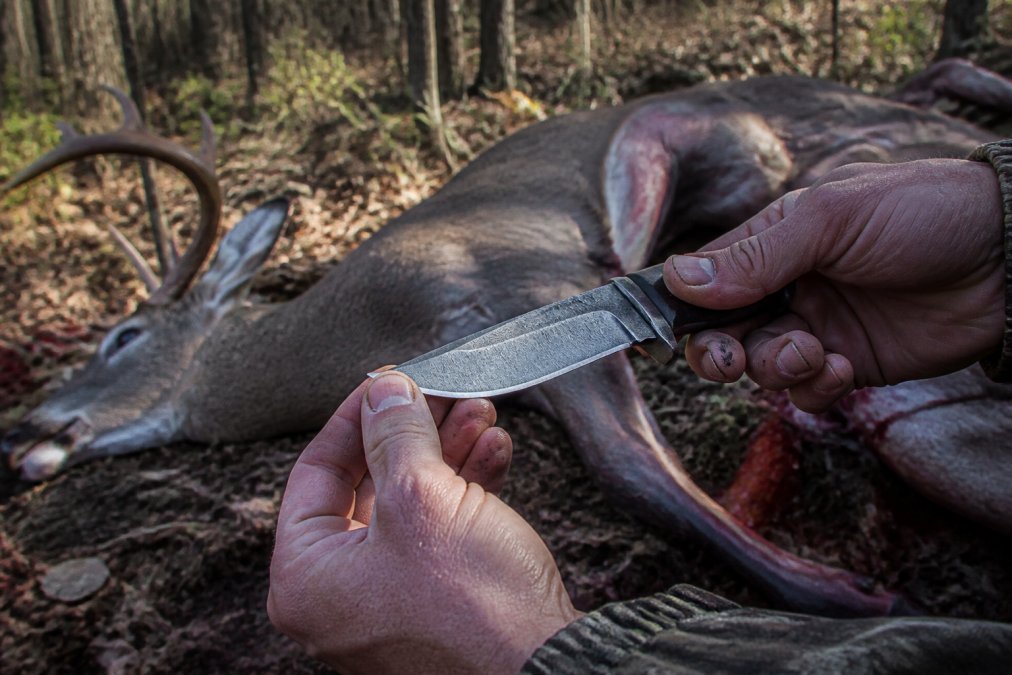 Hunter inspecting the sharp edge of a fixed blade knife after using field dressing knives on a deer.
Edge Retention, Toughness, and Corrosion Resistance
Edge retention matters most when you're processing game far from your truck. A blade that holds its edge through hide, muscle, and joint work saves you from stopping mid-job. Toughness matters when you hit bone or torque the blade through a stubborn joint; a brittle steel chips instead of flexing. Corrosion resistance matters because field dressing is a wet, bloody job, and a reactive blade left uncleaned will pit overnight.
Top Steel Recommendations for Hunting Knives
For most hunters, powder metallurgy stainless steels like MagnaCut and the CPM family offer the best all-around balance of edge retention, toughness, and corrosion resistance. These steels use powder metallurgy to distribute alloy elements evenly, which reduces the weak points that cause chipping. They cost more and take more effort to sharpen, but they hold up through hard use.
MagnaCut was designed specifically to balance corrosion resistance with toughness and edge retention, a combination older stainless grades struggled to deliver. CPM variants such as CPM S35VN and CPM 154 offer similar benefits with slightly different trade-offs. Vanadium carbides in these steels boost wear resistance, though they also make sharpening slower. If you want a steel that resists rust, resists chipping, and holds an edge, this is the category to shop.
| Steel Type |
Edge Retention |
Toughness |
Corrosion Resistance |
Best For |
| Carbon steel |
High |
High |
Low |
Hunters who sharpen often |
| Standard stainless |
Medium |
Medium |
High |
Wet, messy conditions |
| Powder metallurgy |
High |
High |
High |
Hard use, backcountry hunting |
Pro Tip
Powder metallurgy steels resist micro-chipping better than conventional stainless because the alloy is mixed as a powder before forging. That even distribution means fewer weak spots along the edge.
Best Blade Shape for Field Dressing
Blade shape and blade geometry are two different decisions, and hunters often conflate them. Shape is the outline of the blade; geometry is the cross-section, how thick the stock is, how the grind tapers toward the edge, and how much steel sits behind the apex. For field dressing, both matter as much as the steel you pick.
Blade Shapes That Work for Field Dressing
A drop point is the default recommendation for good reason. The spine curves down to meet the edge, which lowers the tip below the hand and gives you control when you're working inside a body cavity. That geometry lets you open an animal without puncturing organs, and the sweeping belly behind the tip handles long cuts through hide and muscle.
Grind Geometry: Where the Real Trade-Off Lives
The grind is where cutting performance and durability fight each other. A full flat grind tapers from the spine all the way to the edge, producing a thin, slicey blade that moves through hide and connective tissue with little resistance. The cost is less steel behind the edge, so a flat-ground blade dulls or rolls faster under hard use, especially if you hit bone or torque the tip.
Backcountry hunters count ounces, and blade geometry is where weight and performance intersect. A thinner stock (around 0.10 to 0.125 inch) with a full flat grind cuts beautifully and carries light, but it has less mass for chopping through joints and less steel to support the edge under lateral load. A thicker stock (0.14 to 0.16 inch) with a saber grind is heavier and cuts less efficiently, but it survives harder use.
Pro Tip
Match the grind to your sharpening habits. If you sharpen often and carry a stone, a thin flat grind rewards you with effortless cutting. If you sharpen rarely and want the blade to survive abuse, a thicker saber or convex grind is the safer pick.
How to Sharpen a Hunting Knife in the Field
You can sharpen a hunting knife in the field with a compact diamond hone or a small sharpening stone, matching the existing grind angle and using light, consistent strokes. Start by finding the bevel angle, usually around 15 to 20 degrees per side for hunting knives, and hold it steady. Push the edge across the stone as if slicing a thin layer off the surface, alternating sides with each pass.
Watch Out
Dragging a blade across a rough surface like concrete or a rock removes steel fast and can round the edge. Use it only as a last resort, and expect to need a full sharpening afterward.
Maintenance Tips for Hunting Knives
Maintenance is where a hunting knife either earns decades of service or fails early. The basics, wipe the blade clean after every use, dry it thoroughly, apply a thin coat of oil, store it in a dry sheath, are table stakes. What most guides skip is what happens to the steel and the meat when you don't keep up, and how different steels react differently over a long processing session.
Food Safety and Steel Reactivity
A patina is not just cosmetic. On carbon steel and low-chromium stainless, the oxide layer that forms from blood, moisture, and acidic tissue is the same chemistry that can transfer a metallic taste and, in some cases, off-flavors to meat during long processing sessions. A heavily rusted or pitted blade is worse: pits harbor bacteria and are nearly impossible to clean fully in the field.
Cold-Weather Behavior
Late-season hunts change how steel behaves. At low temperatures, many steels lose some toughness and become more prone to chipping under impact or lateral load, the same torque that a blade shrugs off in October can crack it in January. Steels with higher toughness ratings and lower hardness (closer to 58 HRC than 62 HRC) tolerate cold better.
Honing vs. Sharpening
Honing and sharpening are different jobs. A honing rod realigns a rolled edge between full sharpenings and extends the time between stone sessions. Sharpening removes steel to create a new apex. Over-honing a thin edge can actually fatigue it, so use light passes and check the edge by running it lightly across your thumbnail, if it catches, it's still sharp; if it slides, it's time to touch it up.
Storage and Sheath Choice
A sheath that traps moisture is one of the most common causes of rust on an otherwise well-maintained knife. Leather looks great but holds water; if you hunt in wet conditions, consider a synthetic sheath or dry the leather thoroughly after each trip. Store the knife clean, dry, and lightly oiled, and never leave it in a wet sheath overnight.
Watch Out
A pitted blade cannot be fully sanitized in the field. If you see active rust or deep pits, retire the knife from meat contact until it's properly cleaned and, if necessary, reprofiled.
Key Takeaway
Maintenance is not just about protecting the knife, it's about protecting the meat. Match your steel to your conditions, wipe and oil between animals, and treat cold-weather toughness as a real constraint, not an afterthought.
Frequently Asked Questions
Is D2 steel better than 440C for field dressing knives?
D2 offers better edge retention and wear resistance than 440C, making it a solid choice for hunters who process multiple animals before sharpening. However, D2 is not fully stainless and can develop patina if not dried and oiled after use. 440C provides superior corrosion resistance and is easier to sharpen in the field, which matters if you hunt in wet conditions or prefer low-maintenance gear. The right pick depends on whether you prioritize edge holding or corrosion resistance.
What are the most important properties of steel for field dressing?
Edge retention, toughness, corrosion resistance, and sharpenability are the four properties that matter most. Edge retention keeps the blade working through hide, muscle, and joints without frequent honing. Toughness prevents micro-chipping when you contact bone. Corrosion resistance protects the blade from blood and moisture during backcountry hunting. Sharpenability matters because a dull knife in the field is useless. No steel excels at all four equally, so the best choice balances these based on your hunting style and environment.
How does edge retention affect field dressing efficiency?
A knife that holds its edge longer lets you finish dressing an animal without stopping to sharpen. Steels with high vanadium carbides, such as powder metallurgy options, resist wear and keep a working edge through multiple deer or elk. Lower-alloy steels may need honing midway through a single animal. Better edge retention reduces fatigue and cuts processing time, but it often comes with trade-offs in toughness or sharpenability. Match the steel to how many animals you typically process per trip.
How often should a field dressing knife be sharpened?
Sharpen after every two to three animals, or sooner if you feel the blade dragging rather than slicing. Touch up the edge with a diamond hone or sharpening stone before each trip. In the field, a few passes on a ceramic rod or pocket stone restore the edge enough to finish the job. If you notice the knife skipping over hide or requiring pressure to cut, stop and sharpen. Regular honing extends the life of the blade and keeps field dressing safer and faster.
Picking the right steel is only half the battle; the other half is having a knife built for how you actually hunt. GS Custom Knives crafts each blade to order, from custom blade shapes and sizes to personalized handles that fit your grip. Every knife is made from superior steel for durability, strength, and balance, and it's backed by a lifetime satisfaction guarantee. Get started with GS Custom Knives and carry a blade built for your season.