

Table of Contents
- Understanding Custom Knife Blade Shapes for Hunting
- Best Hunting Knife Blade Shape: Core Profiles Explained
- Drop Point vs Clip Point Hunting Knife: Which Performs Better
- Skinner Knife Blade Shape: Design and Application
- Blade Shape for Field Dressing: Matching Profile to Task
- Blade Geometry Beyond Shape: Edge, Grind, and Tip Design
- Custom Specifications and Measurement Guidance
- Maintenance, Field Sharpening, and Durability
- Frequently Asked Questions
Last Updated: October 17, 2026
Understanding Custom Knife Blade Shapes for Hunting
Choosing the right custom knife blade shape for hunting can mean the difference between a clean, efficient field process and frustration. At GS Custom Knives, we know hunters need blades tailored to specific tasks, field dressing, skinning, or camp work, and understanding how shape affects cutting performance, control, and durability is essential to choosing well.
Blade shape determines field performance: a drop point excels at general work and slicing, a clip point offers precision and piercing control, a trailing point reaches deep with extended belly, a gut hook handles specialized chores, and a skinner provides curved geometry for hide removal.

Best Hunting Knife Blade Shape: Core Profiles Explained
The best hunting knife blade shape depends on your primary field task and cutting style. Learn the core profiles and how each performs in practice.
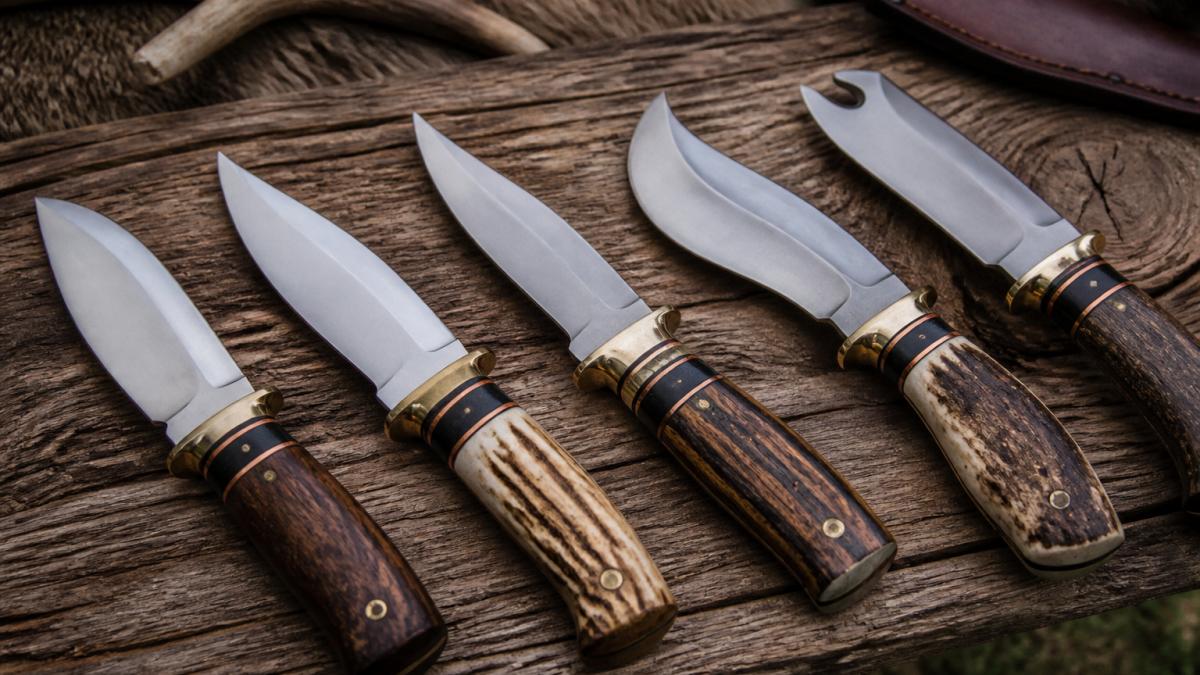
Drop Point: The All-Around Workhorse
A drop point blade features a spine that curves downward to meet the edge near the tip, creating a rounded point. It remains the most versatile hunting knife blade shape because it balances strength, control, and cutting performance across multiple tasks.
The drop point excels at slicing through muscle and connective tissue without puncturing organs or hide. GS Custom Knives offers drop point models like the Full Tang Fix Blade Big Game Hunter and The Rocky Hook Drop Point Skinner, both built from high-quality stainless steel with edges optimized for field performance.

The main limitation is less piercing power than a clip point. If initial penetration cuts are your priority, a clip point may serve you better, but for regular field processing, the drop point's blend of strength and precision makes it the default choice.
Clip Point: Precision and Control
A clip point blade has a spine that runs straight or slightly curved toward the tip, then drops sharply, often with a false edge, creating an acute, fine point.
Clip points deliver superior piercing control and fine-point work. The false upper edge allows controlled blade rotation without full finger pressure, shining during initial penetration where a precise entry point prevents organ damage.
The trade-off is a more fragile acute tip: striking bone or applying lateral pressure can cause chipping. For hunters who prioritize precision over raw cutting power, the clip point remains unmatched.
Trailing Point: Extended Reach and Slicing
A trailing point blade has a spine that curves upward toward the tip, creating maximum belly and reach. This extended edge excels at slicing and draw-cutting, and while less common in hunting knives, it's valuable where long, controlled slicing cuts dominate.
The extended belly makes it exceptional for skinning and long slicing cuts through muscle, and the upward spine curve guides your hand through the motion. Its geometry absorbs lateral pressure well, making it more forgiving than a clip point, though the acute tip is vulnerable to damage if used for piercing or prying.
Gut Hook: Specialized Field Processing
A gut hook isn't a blade shape in the traditional sense, it's a specialized hook integrated into the blade spine, typically near the tip, designed for opening body cavities without puncturing internal organs.
Gut hooks excel at the opening cut, where precision prevents organ damage that can taint meat.
The limitation is added complexity and the practice required to use it effectively. A sharp, well-designed gut hook is essential, a dull hook becomes dangerous as pressure increases and control decreases.
Drop Point vs Clip Point Hunting Knife: Which Performs Better
Comparing drop point versus clip point hunting knife designs reveals clear performance differences that depend on your field tasks and cutting style.
Drop point blades prioritize versatility and strength. The rounded tip resists chipping under lateral pressure, and the geometry supports slicing and piercing.
Clip point blades prioritize precision and piercing control. The acute tip concentrates cutting force for easier, more controllable penetration, shining during the critical opening phase where accuracy prevents organ damage.
For most hunters, the drop point remains the better all-around choice because it handles a wider range of tasks without specialized technique.
Skinner Knife Blade Shape: Design and Application
A skinner blade features a curved edge and a spine that follows the curve, optimized for separating hide from muscle without puncturing either. Designs vary from aggressive to subtle curves, but all prioritize the draw-cutting motion that defines efficient skinning.
The curve naturally guides your hand through the skinning motion, reducing fatigue and improving consistency, while maximizing contact with hide and muscle for lighter pressure and finer control. Skinners work best with a draw-cutting motion rather than the push-cutting strokes used with a drop point or clip point. The Yukon Skinner from GS Custom Knives features an aggressive thumb stop for a secure no-slip hold, a center finger hold, and an overall length of 8½ inches with a 3½-inch cutting edge.

The curved geometry makes it less suitable for general camp work or field dressing than a drop point, but if you regularly process multiple animals and value skinning efficiency, a dedicated skinner is a worthwhile investment.
Blade Shape for Field Dressing: Matching Profile to Task
Blade shape for field dressing should prioritize precision during the opening phase, then support efficient slicing through muscle and connective tissue. The ideal knife combines an acute tip for controlled penetration with sufficient belly for slicing.
The opening cut requires precision to avoid puncturing the paunch, intestines, or organs that can taint meat, a clip point excels here with its acute tip and fine-point control.
Many hunters carry two knives, a clip point for opening and a drop point or skinner for processing, but a well-designed drop point with a reasonably acute tip handles both phases adequately for most.
Blade Geometry Beyond Shape: Edge, Grind, and Tip Design
Blade shape is only one factor in cutting performance. Edge geometry, grind type, and tip design all influence field behavior, and understanding them helps you customize a hunting knife wisely.
Edge geometry is the angle at which the blade tapers to a sharp edge.
Grind type describes how the blade is shaped from spine to edge.
Tip design affects performance and safety: a sharp, acute tip excels at precise work but chips easily, while a rounded tip resists chipping but offers less precision.
Custom Specifications and Measurement Guidance
When ordering a custom knife blade shape for hunting, specific measurements and design feedback ensure a tool tailored to your needs. Understanding key specs helps you communicate requirements clearly.
Blade length affects reach and cutting surface. Most hunting knives range from 3 to 5 inches: shorter blades (3 to 3.5 inches) offer better control for detailed field dressing, while longer blades (4 to 5 inches) provide more slicing surface for larger game or multiple animals.
Blade width affects cutting power and versatility.
Blade thickness influences durability and cutting performance.
Overall knife length affects balance and handling.
Handle material affects grip, durability, and comfort. GS Custom Knives offers Dymondwood, stabilized maple, Bolivian rosewood, and acrylic acetate, choose based on climate, intended use, and preference for aesthetics and tactile feel.
Maintenance, Field Sharpening, and Durability
A custom hunting knife blade shape for hunting requires proper maintenance and field sharpening to remain effective. Knowing how to care for your blade ensures years of reliable performance.
Field sharpening maintains edge performance on extended trips.
Full sharpening removes damaged metal and restores a truly sharp edge.
Corrosion resistance depends on steel type and maintenance.
Durability improves with proper technique and care. Avoid striking bone or prying with your hunting knife, these stress the blade and can cause chipping or breaking.
| Blade Profile | Best For | Key Strength | Primary Limitation |
|---|---|---|---|
| Drop Point | All-around hunting work | Versatility and strength | Less precision than clip point |
| Clip Point | Precision and field dressing | Fine-point control | Fragile tip under stress |
| Trailing Point | Extended slicing work | Long belly for draw cuts | Less suitable for general tasks |
| Gut Hook | Opening body cavity | Controlled penetration | Requires practice and skill |
| Skinner | Efficient hide removal | Curved edge for skinning motion | Limited versatility |
Selecting the right custom knife blade shape for hunting requires understanding how profile, geometry, and specifications work together in the field.
Frequently Asked Questions
What blade shape is best for a hunting knife?
The best blade shape depends on your primary task. Drop point blades excel at all-around use, offering balance between cutting performance and control. Clip points provide precision for detail work. Trailing points maximize slicing surface for skinning. Gut hooks specialize in field dressing. Most hunters benefit from a drop point custom knife blade shape as their primary tool, then add specialized shapes for specific tasks like skinning or processing.
Is a drop point or clip point blade better for hunting?
Drop point blades are generally superior for hunting because they offer a stronger tip, more belly for slicing, and better control during field dressing. Clip points excel at precision cutting and piercing but have a weaker tip that can break under heavy use. For serious hunting, a drop point provides the durability and versatility most field situations demand. The choice between drop point vs clip point hunting knife ultimately depends on whether you prioritize all-around reliability or specialized precision work.
What is a skinner blade used for?
A skinner blade shape is designed specifically for removing hides from game. The short, curved belly and thumb stop on the spine provide control and leverage when separating hide from carcass. The skinner knife blade shape minimizes puncturing the hide, which matters if you're preserving it. Skinners work well for upland game, deer, and other medium-sized game where hide quality or ease of processing matters. They're less versatile than drop points but superior for their specific task.
Which hunting knife blade shape is best for field dressing?
Gut hook and trailing point shapes are purpose-built for field dressing. A gut hook features a small sharpened hook on the spine that opens the abdomen without puncturing internal organs. Trailing points offer maximum blade belly for long, controlled cuts through hide and muscle. For blade shape for field dressing, gut hooks are fastest for the initial opening, while trailing points provide better control during detailed work. Many hunters prefer a drop point as a compromise that handles both field dressing and other camp tasks adequately.
How does blade shape affect a hunting knife's performance?
Blade shape determines how force distributes during cutting, where the tip points, and how much belly is available for slicing. A curved belly (like trailing point or skinner) excels at slicing and skinning. A straighter edge (like clip point) concentrates force for piercing and detail cuts. A drop point balances both. The blade tip angle affects penetration: acute tips pierce easily but break under stress, while blunter tips resist breaking but require more force. Custom blade design lets you optimize shape specifically for your hunting tasks.
How long does it take to receive a custom hunting knife?
Custom knife production timelines vary by maker. GS Custom Knives handcrafts each blade to order, ensuring quality over speed. Typical custom knife orders take several weeks to a few months depending on design complexity, material selection, and current order volume. If you need a knife for an upcoming hunting season, contact the maker early and discuss your timeline. Having a clear design plan, knowing your preferred blade shape, steel type, and handle material, speeds up the ordering process significantly.
What makes a custom hunting knife worth the higher price?
Custom hunting knives command higher prices because they're handcrafted to your exact specifications, use premium steel, and come with lifetime satisfaction guarantees. Mass-produced knives use cheaper materials and assembly methods that result in chips, dull edges, and poor balance. A custom blade shape tailored to your specific hunting tasks outperforms generic options. The durability, balance, and reliability of a handcrafted knife justify the investment through years of reliable field use. You're paying for precision engineering and materials that last.
Can I customize my hunting knife if I'm unsure what blade shape I need?
Yes. Most custom knife makers, including GS Custom Knives, work with customers to determine the right blade shape based on your hunting style, game type, and field tasks. Discuss your primary use (field dressing, skinning, all-around camp work) and any specific challenges you've faced with previous knives. Experienced makers can recommend blade shapes and geometries that solve your actual problems. The customization process is collaborative, so starting without a firm design is normal and expected.