Table of Contents
Last Updated: October 5, 2026
How Custom Knife Customization Works: A Step-by-Step Overview
Custom knife customization starts with one idea: you are not picking from a shelf, but commissioning a tool built around your hand, your use, and your taste.
A custom knife is a blade designed and built to your specifications, not a stock pattern pulled from a catalog.
Below, we break the process into clear steps, with timeline, cost factors, and approvals explained along the way.
What You Can Customize on a Knife
Here is what most customers change:
-
Blade shape and length for your specific tasks
-
Handle material, color, and shape for grip and comfort
You do not need to know all of this upfront. Many customers start with a single idea, such as "a skinning knife for deer season," and we build the rest together.
Step 1: Define Intended Use and Start the Design Conversation
Every build starts with one question: what will this knife actually do? A hunting knife for field dressing has different needs than a fillet knife or a chef's blade. Tell us the task, your hand size, and how you grip a knife, and we suggest blade lengths and handle shapes that fit.
Pro Tip
Bring a knife you already like to the conversation, even a cheap one. The length and handle curve tell us more about your preferences than any description can.
Step 2: Choose Custom Knife Blade Shapes and Steel
Blade shape and steel decide how the knife performs. Pick them based on the job, not looks alone.
Common custom knife blade shapes include:
-
Drop point for all-around hunting and utility work
-
Clip point for detailed cutting and skinning
-
Fillet for fish, with a thin, flexible profile
For steel, carbon steel takes a keen edge and holds it well. Damascus, made by folding and forging layers together, blends looks with a tough, long-lasting edge.
Forging vs. Stock Removal: What the Method Means for You
Forging shapes hot steel with hammer and heat. Stock removal grinds the shape from a solid bar of steel. Either way, heat treatment is what makes the edge hold: it hardens the steel to a target range, then tempers it so the blade does not crack under use.
Step 3: Select Custom Knife Handle Materials and Engraving
Handle choice is where a knife becomes yours, affecting grip, balance, and how it looks after years of use.
Popular custom knife handle materials include:
-
Stabilized hardwood, such as maple or cocobolo, for warmth and grip
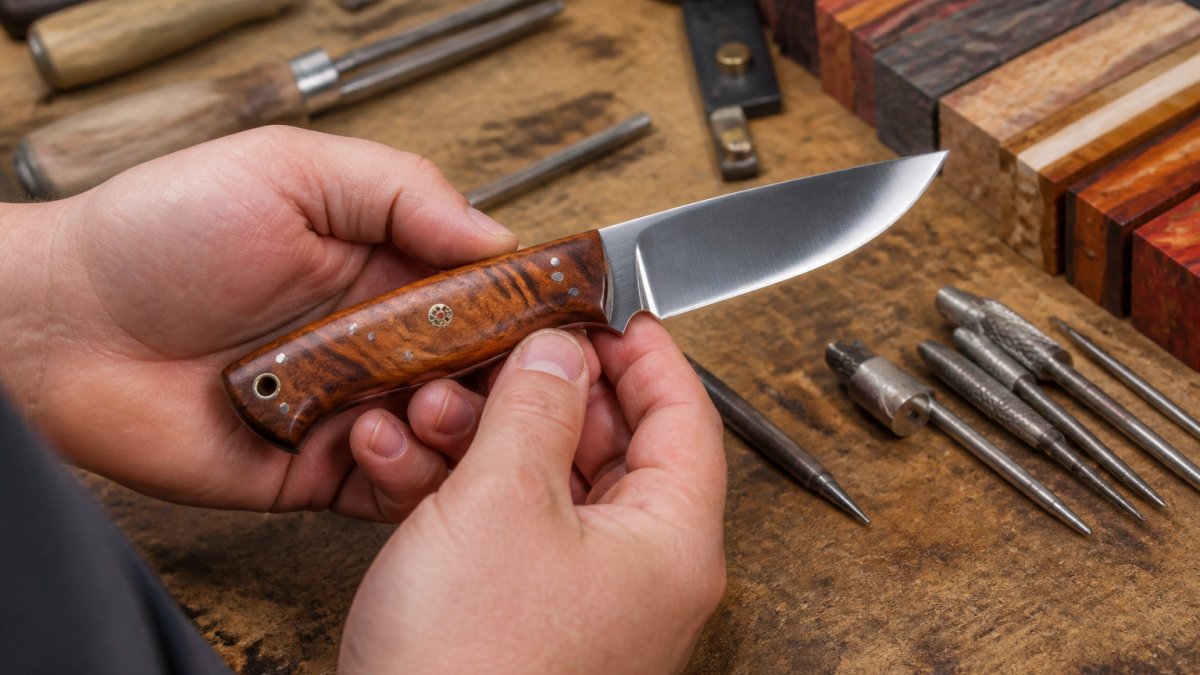 Close-up of a knife maker's hands holding a finished custom knife with a polished hardwood handle, engraving tools and handle material samples on a workbench behind it
Text Engraving, Graphic Engraving, and Custom Artwork
Engraving adds a personal mark. Text engraving covers names, initials, and a special date, often on the blade or spine. Graphic engraving handles logos, symbols, and custom artwork. Makers use laser engraving for fine detail or hand engraving for a traditional look. A family crest or unit insignia can turn a working knife into an heirloom.
Watch Out
Engraving is permanent. Once the design is cut, it cannot be undone. Approve the exact spelling, font, and placement before the maker starts.
How Long Does It Take to Make a Custom Knife?
Most custom knives take several weeks to a a few months, depending on the design and the maker's queue. Simple builds move faster. Complex Damascus patterns and custom sheaths add time.
Expect the timeline to include:
-
Design and quote: a few days to a week
-
Blade work and heat treatment: one to three weeks
-
Handle, finishing, and engraving: one to three weeks
Ask for a target date in writing. If you need a knife for a specific season, order early and say so upfront.
Your Custom Knife Ordering Checklist and Pricing Factors
A custom knife ordering checklist keeps the build on track and prevents expensive mid-build changes. Run through it before you pay a deposit.
 Custom Damascus hunting knives
| Decision |
Why It Matters |
Best For |
| Blade shape |
Sets how the knife cuts |
Matching your main task |
| Steel type |
Affects edge life and rust |
Carbon for edge, stainless for wet use |
| Handle material |
Controls grip and looks |
Comfort and personal style |
| Engraving |
Adds personal meaning |
Gifts and keepsakes |
| Sheath |
Protects the blade |
Field and travel use |
What Actually Drives the Price of a Custom Knife
A custom knife quote is the sum of several cost drivers. Understanding them helps you budget before you commit.
Custom Damascus Chef Knife →
-
Steel and stock: A plain carbon or standard stainless bar costs far less than a patterned Damascus billet, which requires many forge welds and produces a high scrap rate. Exotic steels with long wear resistance also raise the base cost.
-
Construction method: Forging involves more hands-on hammer time and heat cycles than stock removal, so a forged blade typically carries a higher labor charge. Stock removal can be more economical for simple profiles.
-
Handle material: Stabilized domestic hardwoods sit at the lower end. Imported exotics, fossilized materials, and resin-and-wood hybrids climb from there. A hidden-tang handle uses less material than a full-tang build.
-
Sheath and accessories: A simple pouch sheath is a modest add-on. A hand-tooled leather sheath with a belt loop, fire-steel holder, or custom dye job adds both material and labor.
-
Revisions and rush requests: Extra design rounds and expedited timelines consume shop capacity and are often billed as add-ons.
Makers commonly quote a base price and list optional upgrades separately. Ask for that breakdown in writing so you can see where your money goes and where to trim if the total runs high.
How to Read a Quote and Set a Realistic Budget
When the quote arrives, check that it states the steel, blade length, handle material, finish, engraving details, sheath type, deposit amount, balance due date, and estimated delivery window. If any line is vague, ask before signing off. Most makers price in tiers: an entry-level working knife, a mid-range build with upgraded materials, and a top-tier piece with Damascus and a custom sheath.
Pro Tip
Ask whether the quote includes sales tax, shipping, and insurance. Those line items can shift the final total, and knowing them upfront prevents a surprise on delivery day.
If the total exceeds your budget, the easiest places to save are handle material, engraving complexity, and the sheath. Blade steel and heat treatment are the last things to cut, because they determine how the knife performs.
Approvals, Deposits, and What the Lifetime Guarantee Covers
Knowing the approval steps, deposit terms, and warranty scope before you commit keeps the build smooth.
The Approval Workflow
Most makers follow a similar sequence:
-
Inquiry and consultation: You describe the intended use, hand size, and preferences. The maker asks clarifying questions and may suggest blade profiles or materials.
-
Design proposal: The maker sends a sketch or CAD drawing with dimensions, steel choice, handle material, and finish options.
-
Revision round: You request changes, blade length, handle contour. Most makers allow one or two revision rounds within the quoted price. Additional rounds may be billed hourly or as a flat fee.
-
Final sign-off: You approve the drawing and specifications in writing. This locks the design. Changes after sign-off can restart part of the build and add cost.
-
Deposit and scheduling: The maker collects a deposit and places your build in the queue.
-
Progress updates: Many makers send photos at key stages, after blade profiling, after heat treatment, and after handle fitting.
-
Final approval and balance: You review photos of the finished knife, pay the balance, and the maker ships.
Deposits, Payment Milestones, and Cancellations
A deposit reserves your spot in the queue and covers initial materials. It is typically non-refundable once the build starts, because the maker has already invested time and stock. The balance is usually due before shipping.
Payment structures vary:
-
Deposit plus balance: A percentage down to start, the rest on completion.
-
Milestone payments: Partial payments at design approval, blade completion, and delivery.
-
Full payment upfront: Less common, but some makers with long waitlists require it.
If you need to cancel, the refund depends on how far the build has progressed. Before materials are cut, you may recover most of the deposit.
Watch Out
Never send a deposit without a written order summary that lists the specs, price, deposit amount, balance due date, and estimated delivery window. That document is your protection if the build drifts from the agreed design.
What the Lifetime Guarantee Covers, and What It Does Not
The lifetime satisfaction guarantee at GS Custom Knives backs the craftsmanship of your knife, covering defects in materials and workmanship for peace of mind with every order.
In practical terms, a craftsmanship guarantee typically covers:
-
Delamination in a Damascus blade or layered handle material
-
Handle separation from the tang under normal use
-
Heat-treatment defects that cause chipping or rolling under ordinary cutting
It generally does not cover:
-
Normal wear: Edge dulling, handle patina, and sheath scuffing are expected.
-
Misuse: Prying, chopping through bone or metal, and using a knife as a screwdriver can damage any blade.
-
Accidental damage: Dropping the knife on a hard surface or leaving it in a corrosive environment.
Read the terms before you buy. Ask whether the guarantee transfers if you give the knife as a gift, and whether it requires you to return the knife for inspection.
Care and Maintenance After Delivery
When the finished knife arrives, inspect it before use. Check that blade shape, handle fit, and engraving match your approved design, and look for gaps between handle and tang, uneven grinds, or scratches that were not part of the finish. Report any issue to the maker immediately.
Day-to-day care is simple:
-
Carbon steel: Wipe dry after every use, apply a thin coat of oil, and store it outside the sheath for long-term storage to avoid trapped moisture.
-
Stainless steel: Rinse and dry after use, especially after cutting acidic foods or saltwater exposure.
-
Handle: Wipe with a damp cloth, dry thoroughly, and re-oil stabilized wood occasionally to prevent drying and cracking.
Key Takeaway
A custom knife is a long-term investment. The approval workflow protects the design, the deposit protects the maker, and the guarantee protects the craftsmanship. Understanding all three before you order means fewer surprises and a knife that serves you for decades.
Frequently Asked Questions
What are the steps in the custom knife customization process?
The process runs through six stages: define intended use, discuss the design with the maker, choose blade shape and steel, select handle material, approve a sketch before production, then receive the finished knife. Each stage builds on the last, so a clear intended use at the start keeps every later decision consistent.
How do you choose a custom knife handle material?
Match the handle to how the knife will be used. Cocobolo hardwood is used on the Custom Damascus hunting knife. Stabilized maple burl is also available. Handle shape matters as much as material: a handle sized to your palm reduces fatigue during long use.
How long does it take to make a custom knife?
Timelines vary by maker and complexity. Hand-forged blades with pattern-welded steel take longer because of the extra forging, folding, and heat treatment steps. A knife with a custom sheath adds time. Ask your maker for a written timeline before you place a deposit, and confirm whether the estimate covers design revisions or only production. If you need a knife for a specific season, order well ahead.
Can you add engraving to a custom knife?
Yes. Text engraving covers names, initials, and a special date, while graphic engraving handles custom artwork, logos, or a family crest. Laser engraving produces fine detail quickly; hand engraving costs more but gives deeper cuts and a traditional look. Decide placement early, since engraving on the blade spine reads differently than engraving on the handle or bolster. Confirm the font, size, and spelling in writing before the maker starts.
A custom knife is only worth it when it fits your hand and your work, and that starts with the right maker. GS Custom Knives builds each blade to your specs, with custom blade shapes and sizes, personalized handles for grip and comfort, and steel chosen for lasting performance. Every knife comes with our lifetime satisfaction guarantee. Get started with GS Custom Knives and commission a knife built for the way you actually use it.