

Table of Contents
- Why Damascus Steel Requires Specific Maintenance
- How to Clean a Damascus Steel Knife After Every Use
- How to Oil a Damascus Steel Knife for Long-Term Protection
- How to Prevent Rust on Damascus Steel Blades
- How to Sharpen a Damascus Steel Knife While Preserving the Pattern
- Maintaining Your Blade's Handle and Sheath
- Common Maintenance Mistakes and What to Avoid
- Developing a Maintenance Schedule for Your Damascus Blade
- Frequently Asked Questions
Last Updated: October 21, 2026
Why Damascus Steel Requires Specific Maintenance
Damascus steel's layered construction creates stunning patterns, and real maintenance demands.
The high carbon content makes Damascus steel reactive: it will discolor, rust, and lose its edge faster than mass-produced alternatives if neglected.
At GS Custom Knives, we craft Damascus blades from 1095 and 15N20 high carbon steels folded together, creating exceptional edge retention and durability.

How to Clean a Damascus Steel Knife After Every Use
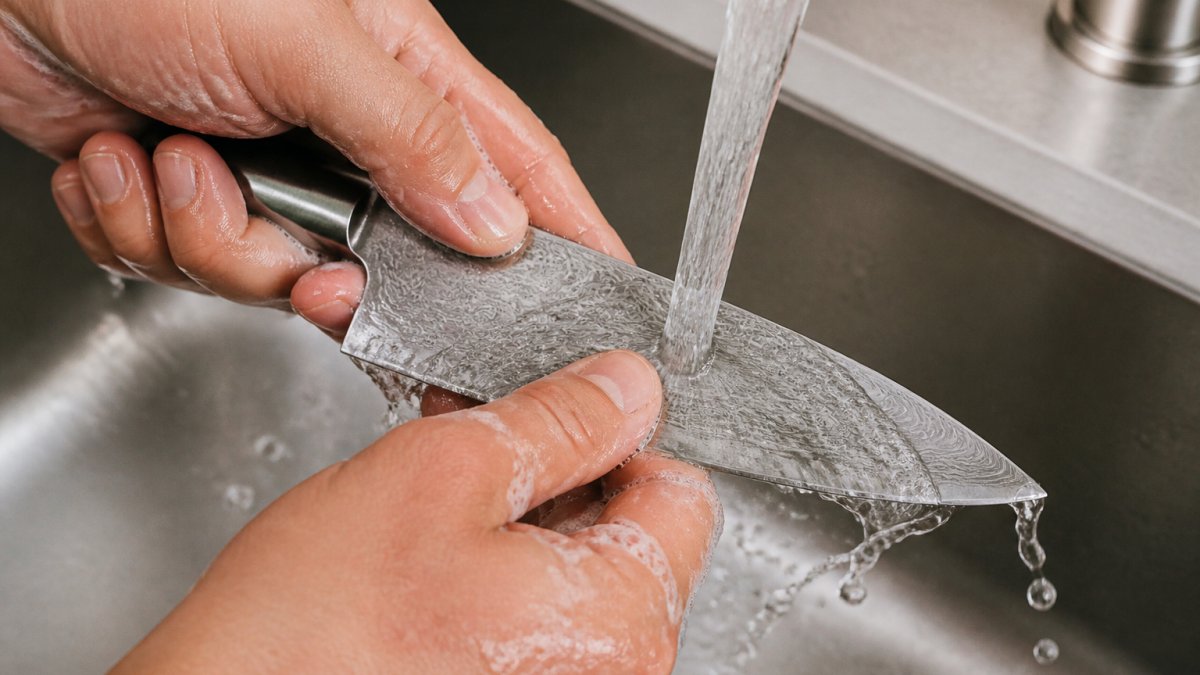
Clean your blade right after use. Don't let food residue, blood, or moisture sit on the steel, even a few hours can start corrosion.
Immediate Cleaning Steps
Don't use a dishwasher, heat, harsh chemicals, and abrasive movement damage the finish and dull the edge. Hand washing takes two minutes.
Avoid steel wool, scouring pads, and abrasives, they scratch the surface and destroy the Damascus pattern.
Never use harsh chemicals or metal cleaners, they strip the protective patina and can pit the steel.
Drying Your Blade Thoroughly
This is where most people fail. They rinse the blade and leave it wet.
Dry the blade immediately and completely with a soft cloth.
Wipe both sides, along the edge, and around the handle, especially where blade meets handle, where trapped water causes corrosion.
For kitchen knives, dry before setting the blade down; for field knives, dry as soon as you finish.
How to Oil a Damascus Steel Knife for Long-Term Protection
Oil protects bare steel from moisture and oxygen. Without it, your blade will rust and lose its luster.
Choosing Food-Safe Oils for Kitchen Blades
For kitchen knives, use food-safe mineral oil or specialized knife oils.
Mineral oil is the standard: inexpensive, widely available, food-safe, and it creates a thin protective layer without affecting taste.
Some makers recommend 3-in-1 oil or similar light machine oils for field and hunting knives, never on kitchen knives.
Check your blade's documentation or contact the maker. Some Damascus knives come with specific oil recommendations. Follow those first.
Application Technique and Frequency
Apply oil to a clean, dry blade, spreading a thin, even coat on both sides with a soft cloth.
A thin layer beats a thick one, excess oil attracts dust and creates a sticky mess.
Wipe away excess with a clean cloth, the blade should look slightly glossy, not wet or slick.
How to Prevent Rust on Damascus Steel Blades
Rust happens when moisture and oxygen attack bare steel. Prevention is easier than removal, but you still need to know how to remove rust without destroying the etched pattern.
Understanding Patina vs. Rust
Your Damascus blade will develop a patina over time, normal and actually protective.
Rust is different: orange, brown, or red discoloration that feels rough and pitted. It damages the steel and spreads if unaddressed.
Light patina is fine, it adds character and protects the underlying steel. Rust is a problem that needs fixing.
Removing Light Surface Rust Safely
Light surface rust is the orange film that appears after a wet night in a sheath or a forgotten rinse. It has not yet eaten into the steel. Treat it before it pits.
Work in this order, and stop as soon as the rust is gone:
- Oil first, not acid. Apply a few drops of mineral oil or a dedicated knife oil to the rusted area. Oil lifts loose oxide and lubricates the surface so you don't scratch the pattern while wiping.
- Use a soft cloth or a non-abrasive pad. A microfiber cloth, a cotton rag, or a melamine-free soft sponge is enough for surface rust. Rub with the pattern, not across it, and use light pressure.
- Try a paste of baking soda and water for stubborn film. Mix a small amount of baking soda with water to make a thin paste, dab it on the rust, let it sit for a minute or two, and wipe it away with a soft cloth. Baking soda is mildly abrasive and mildly alkaline, which helps lift oxide without the aggression of scouring powder.
- Rinse and dry immediately. Wipe away all paste residue with a damp cloth, then dry the blade completely with a clean cloth. Do not let it air-dry.
- Re-oil the bare steel. Removal strips the protective layer. Apply a thin coat of oil right away.
What to avoid at this stage: steel wool, scouring pads, sandpaper, and any abrasive cleanser. These scratch the polished layers and blur the contrast between the 1095 and 15N20 bands that make the pattern visible.
Treating Deeper Pitting Without Damaging the Pattern
Pitting is rust that has eaten below the surface. You'll feel it as rough texture or see dark craters. Pitting is a job for the maker or a professional, not for a kitchen-sink remedy.
If you find pitting:
- Stop using the blade for food until it is treated.
- Apply oil to slow further corrosion.
- Contact the maker or a professional sharpener who works with Damascus. Re-etching and refinishing are separate processes from routine maintenance, and they require controlled acid and polishing steps that are not a DIY job.
A common pattern among makers is to treat light surface rust as routine maintenance and pitting as a repair.
Storage Conditions and Environmental Control
Store your blade in a dry place. A drawer, sheath, or knife block works well.
Keep your blade away from prolonged exposure to moisture. High humidity environments speed up corrosion.
Use a quality leather sheath for field knives.
The Damascus midsize Kitchen knife →
For kitchen knives, a knife block or magnetic strip keeps the blade accessible and protected.
How to Sharpen a Damascus Steel Knife While Preserving the Pattern
A dull Damascus blade loses its cutting ability and its beauty. Sharpening keeps both intact, but the layered construction changes how you should approach it. The pattern lives in the outer layers of the steel, and every pass on a stone removes a little of that surface.
Why Damascus Sharpens Differently
Damascus is a layered construction, not a single steel recipe. The visible pattern comes from the contrast between the high carbon layers, such as 1095 and 15N20, after the blade is etched.
The goal is to sharpen the edge bevel only and leave the flat and the etch alone. That is the difference between routine sharpening and refinishing. Routine sharpening maintains the edge.
Choosing the Right Method
Use a whetstone or a professional sharpening service. Whetstones let you control the angle and pressure. This protects the blade's distinctive pattern and maintains the edge.
Never use an electric sharpener or grinder on a Damascus blade. The speed and heat can damage the layered steel and destroy the pattern.
If you are new to whetstones, a common approach is a two-stone progression: a medium grit around 1000 for setting the edge and a finer grit around 3000 to 6000 for finishing.
Holding a Consistent Angle
If you use a whetstone, maintain a consistent angle. Most Damascus blades work well at a 15 to 20 degree angle per side.

A simple check: color the edge bevel with a marker, take one light pass on the stone, and look at where the marker is removed.
Keep the flat of the blade off the stone. Only the bevel should contact the abrasive.
Testing Sharpness and Knowing When to Stop
Test the blade's sharpness regularly. A sharp blade needs less pressure and lasts longer between sharpenings. Press the blade gently against your thumbnail at an angle. A sharp blade will catch and hold.
Stop sharpening as soon as the edge catches consistently along its length. Over-sharpening removes more steel than necessary and shortens the life of the blade.
When to Send It to a Professional
Send the blade to the maker or a professional sharpener when you see chips, when the edge will not catch after a reasonable session on the stones, or when the pattern itself has been scratched or worn. Those are signs that the blade needs more than routine sharpening. A professional can sharpen, refinish, and re-etch in the right order without flattening the layers that create the pattern.
Maintaining Your Blade's Handle and Sheath
The handle and sheath matter as much as the blade itself.
Keep the handle clean and dry.
Leather sheaths need care too. Keep them dry and clean.
Check the sheath's stitching and condition regularly. A damaged sheath won't protect your blade.
For custom knives from GS Custom Knives, our sheaths are built to last.
Common Maintenance Mistakes and What to Avoid
Most damage to Damascus blades comes from preventable mistakes.
Don't store your blade wet or damp.
Don't use harsh chemicals or aggressive scrubbing. These destroy the blade's finish and create pitting.
Don't neglect the handle and sheath. A damaged handle affects grip and balance.
Don't skip oiling for extended periods.
Don't assume your Damascus blade needs special treatment beyond these basics. The routine is simple.
Developing a Maintenance Schedule for Your Damascus Blade
A simple routine keeps your blade in peak condition.
| Task | Frequency | Why It Matters |
|---|---|---|
| Clean and dry after use | Every use | Prevents rust and corrosion |
| Oil the blade | Every 2-4 weeks (regular use) | Protects steel from moisture |
| Check for rust or damage | Monthly | Catches problems early |
| Sharpen (whetstone) | Every 6-12 months | Maintains edge and performance |
| Professional sharpening | As needed | Preserves pattern and balance |
| Inspect handle and sheath | Quarterly | Prevents damage to blade |
For kitchen knives used daily, you'll clean and dry after every use and oil every two weeks.
The schedule changes based on your environment and use. High humidity means more frequent oiling.
Track your maintenance. A simple note in your phone reminds you when to oil or check your blade.
Understanding how to maintain handmade damascus steel isn't complicated, but it does require attention.
Frequently Asked Questions
Does Damascus steel need to be oiled?
Yes. Damascus steel is made from high-carbon steel (typically 1095 and 15N20 layers), which is prone to rust and corrosion without protection. Applying mineral oil or food-safe oil after cleaning and drying creates a protective barrier that prevents moisture from reaching the blade surface. For kitchen knives, oil the blade every 1-2 weeks depending on humidity and use frequency. Field and hunting blades may need more frequent oiling in damp conditions.
How often should you oil a Damascus steel blade?
The frequency depends on your environment and blade use. In dry climates, oiling every 2-3 weeks may suffice. In humid areas or after outdoor use, oil weekly or even after each use. Kitchen knives used regularly should be oiled every 1-2 weeks. Always oil immediately after cleaning and drying. If you notice the blade losing its luster or showing early discoloration, that's a sign it needs oil sooner. Store your blade oiled, especially during off-season periods.
Can Damascus steel rust?
Yes, Damascus steel can rust if not properly maintained. The high-carbon content that gives Damascus blades their strength and edge retention also makes them susceptible to corrosion. Rust forms when moisture sits on the blade for extended periods or the blade is exposed to acidic foods without immediate cleaning. Proper maintenance, cleaning, drying thoroughly, oiling, and storing in a dry location, prevents rust. A protective patina (a thin, dark layer) may develop naturally and actually protects the blade; this is different from rust and is desirable.
What should you avoid when maintaining Damascus steel?
Never put Damascus steel blades in the dishwasher; the heat, moisture, and detergent cause rapid corrosion. Avoid abrasive materials like steel wool or harsh scouring pads that damage the etched pattern and blade finish. Don't use metal cleaners or acidic substances that strip the protective oil. Avoid prolonged contact with acidic foods (vinegar, citrus, tomatoes) without immediate cleaning. Don't store the blade wet or in a damp sheath. Keep the blade away from standing water and high-humidity environments without regular oiling and maintenance.